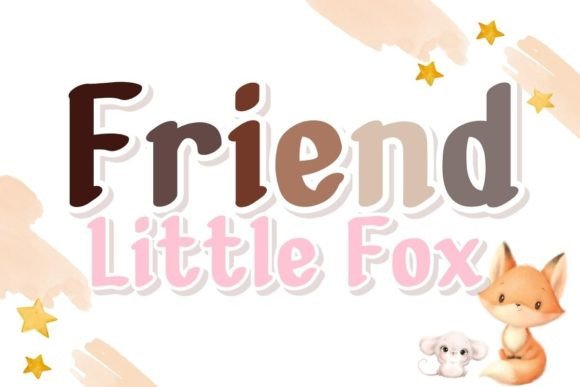
Friend Little Fox: A Versatile Font for Building a Professional Brand Identity
As a small business owner, I know how important it is to create a cohesive and trustworthy brand. Every detail—from your logo to your packaging—plays a role in how customers perceive your business. That’s why I was excited to discover Friend Little Fox, a script font that blends elegance with approachability. Whether you're designing a logo, crafting product labels, or creating social media posts, this font adds a personal touch that helps your brand stand out in a professional, memorable way.
What Makes Friend Little Fox Unique?
Friend Little Fox is more than just a pretty script. It’s a thoughtfully designed typeface that works beautifully as a display font, script font, and even a handwritten-style font. The curves are soft but confident, and the spacing is balanced for both print and digital use. It carries a warm, friendly tone that feels handmade without sacrificing clarity.
This font brings personality to any project. Whether you're launching a line of organic skincare products or branding a cozy neighborhood café, Friend Little Fox adapts to your voice. It’s the kind of font that feels familiar and trustworthy, like a handwritten note from a friend.
Real-World Uses for Friend Little Fox
One of the best things about this font is how versatile it is across different brand touchpoints. Here are a few places I’ve found it especially effective:
- Logo design – Perfect for boutique shops, lifestyle brands, or wellness businesses that want a soft, modern look.
- Packaging design – Works beautifully on product labels, stickers, and thank-you cards for handmade goods, candles, or food items.
- Social media graphics – Ideal for Instagram stories, Pinterest pins, and Facebook posts that need a polished but personable feel.
- Website banners and headers – Adds a personal touch to landing pages or hero sections without being distracting.
- Printed marketing materials – Shines on flyers, business cards, and menus where readability and charm are both important.
It’s especially effective when used sparingly as a headline font or accent typeface. For example, I used Friend Little Fox for the name of a new line of artisanal jams and paired it with a clean sans serif for the supporting text. The result? A label that felt both professional and handcrafted.
Why Font Choice Matters for Branding
Fonts are one of the most powerful—and often overlooked—tools in brand identity. They shape how your audience feels about your business before they even read a word. A well-chosen font like Friend Little Fox can make your brand feel more consistent, recognizable, and trustworthy.
Think about your favorite brands. Chances are, their font choice plays a big role in how you perceive them. If you're running a luxury candle brand, you might want something sleek and minimalist. If you're selling hand-poured soy candles or organic herbal teas, a font like Friend Little Fox gives you that artisanal, small-batch feel.
How to Use Friend Little Fox Effectively
While Friend Little Fox has a strong visual presence, it’s best used as a display font or headline font. It shines in short bursts—like product names, taglines, or feature headlines. For longer blocks of text, pair it with a clean sans serif or serif font to maintain readability.
Here are a few pairing ideas I’ve used successfully:
- Pair Friend Little Fox with Montserrat or Open Sans for a modern, clean contrast.
- Combine it with a serif like Merriweather for a vintage-inspired look.
- Use it alone in packaging headers or logo designs where visual impact is key.
Remember, the goal is to create balance. Friend Little Fox should enhance your message, not overpower it.
Readability in Real Business Settings
One of the biggest concerns when using a decorative font is readability. I’ve tested Friend Little Fox in a variety of real-world settings, and it holds up surprisingly well. On printed packaging, it’s crisp and legible at medium sizes. On mobile screens, it maintains its charm without becoming hard to read.
Still, I recommend testing it in context before committing to it across your entire brand. Try using it in a sample label or mock-up social media post. If it looks good on a phone screen and in print, you’re good to go.
Checking Font Licensing for Commercial Use
Before you use Friend Little Fox on product packaging, templates, or merchandise, make sure you have the right license. Many fonts are free for personal use but require a commercial license for business applications.
Friend Little Fox is available through many font marketplaces, and most will clearly state the licensing terms. Always double-check if you're using the font in client work, digital downloads, or physical products. It’s a small step that can save you from legal headaches down the line.
Testing Before Committing
When I first started using Friend Little Fox, I created a few mock-ups of a new brand kit for a coaching business. I tried it on a logo, a social media post, and a business card design. I compared it with a few other script fonts and found that Friend Little Fox offered the perfect balance of personality and professionalism.
My advice? Start small. Use the font in one or two design elements and see how it feels. If it aligns with your brand voice and works well across platforms, you’ll know it’s a solid choice.
A Font That Works as Hard as You Do
At the end of the day, your brand deserves a font that supports your story and helps you connect with your audience. Friend Little Fox isn’t just another pretty script—it’s a practical, flexible typeface that adds warmth and sophistication to your brand materials.
Whether you're building a website, designing packaging, or creating content for Instagram, this font helps you look polished and personable. And for a small business owner like me, that’s exactly what I need to make a lasting impression.